

Many years back when technology was starting to make its way into the financial sector, fintech companies seemed poised to disrupt the dominance of traditional banks. However, the anticipated rivalry has increasingly given way to a trend of strategic collaboration.
Today, fintechs and traditional banks are forging partnerships combining the best of both worlds: the technology and a user-centric approach in fintech and the infrastructure and regulatory expertise of large banks.
This shift from competition to collaboration underscores a mutual recognition of each party’s value, setting the stage for a joint effort to redefine the delivery of financial services.
A Competitive Landscape
After the fintech sector emerged from the shadows of the 2008 financial crisis, early fintech startups focused on niches underserved by banks, such as peer-to-peer payments, alternative lending, and personal financial management. These companies leveraged technology to offer faster, more user-friendly services, often cheaper than traditional banks.
Fintechs capitalized on the agility and customer-centric approaches that legacy banking systems, burdened by outdated technology and regulatory constraints, struggled to match. Faced with the threat of losing market share to fintech startups, traditional banks were compelled to accelerate their digital transformation efforts. This meant investments in technology upgrades, with banks seeking to enhance their online and mobile banking platforms, improve customer service, and introduce new digital products.
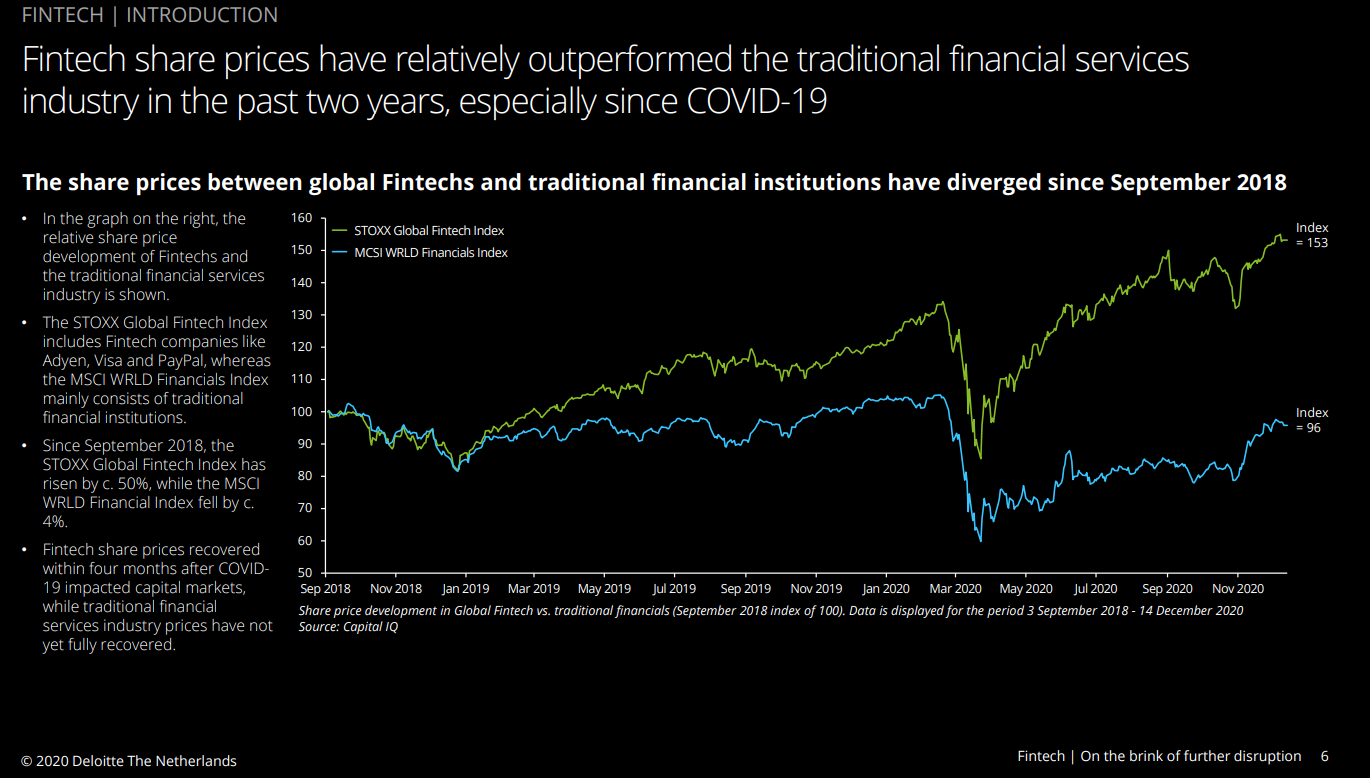
But despite the rise in digitalization from traditional banks, fintech startups have experienced substantial growth in funding, the emergence of new unicorns, and significant M&A activities, especially in the last few years.
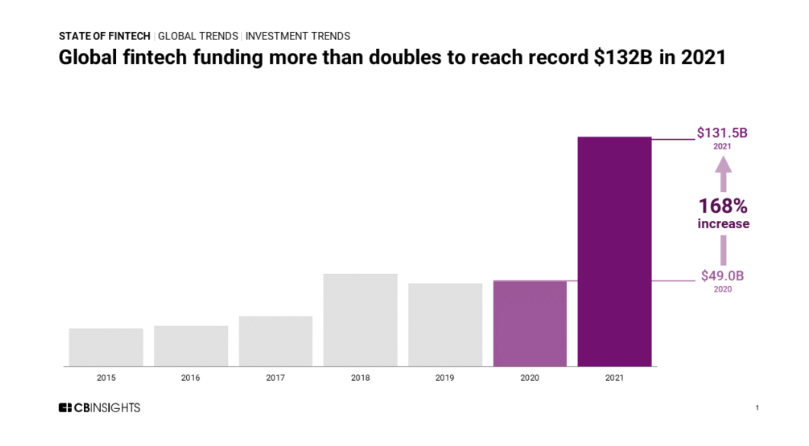
Global fintech funding more than doubled year-over-year, with fintech accounting for $1 in every $5 of global venture funding. The number of $100M+ mega-rounds in fintech also tripled year-over-year, shattering the total observed in 2020. This surge contributed to a record count of fintech unicorns, indicating not only the scale of investment but also the high valuation of fintech companies relative to traditional financial institutions.
A Shift Towards Collaboration
Despite the exponential growth of fintech companies compared to traditional banks, the financial landscape evolved from one of stark competition to increasing collaboration. This shift was driven by recognizing that partnerships can offer mutual benefits that competition alone cannot.
Turning Points
Regulatory changes, notably initiatives like open banking in Europe, have mandated a more collaborative approach to financial services, compelling banks to share data with fintech firms. This regulatory shift, combined with the rapid technological advancements led by fintechs in areas such as blockchain and AI, has challenged traditional banks to adapt quickly.
Recognizing the benefits of leveraging fintech innovation, banks have sought partnerships to enhance their technological capabilities and meet the evolving expectations of today’s customers, who demand seamless, personalized, and instant financial services. This convergence has naturally fostered an environment where collaboration between banks and fintech companies is not just beneficial but essential for staying competitive in the market.
Tech as a Service: Case Studies
The last few years saw fintech companies directly sell their technology services to banks. This model enables banks to swiftly adopt advanced technologies and innovative solutions, enhancing their operational efficiency and customer service. It represents a straightforward business relationship where fintechs act as vendors, providing banks with the tools they need to modernize and compete in a digital landscape.
Fintechs developing and selling technology to banks is a trend that underscores the symbiotic relationship between innovation and traditional banking. It highlights how collaboration, rather than competition, can lead to mutual growth and the advancement of the financial services industry as a whole. And some companies are doing this better than others:
Engine by Starling
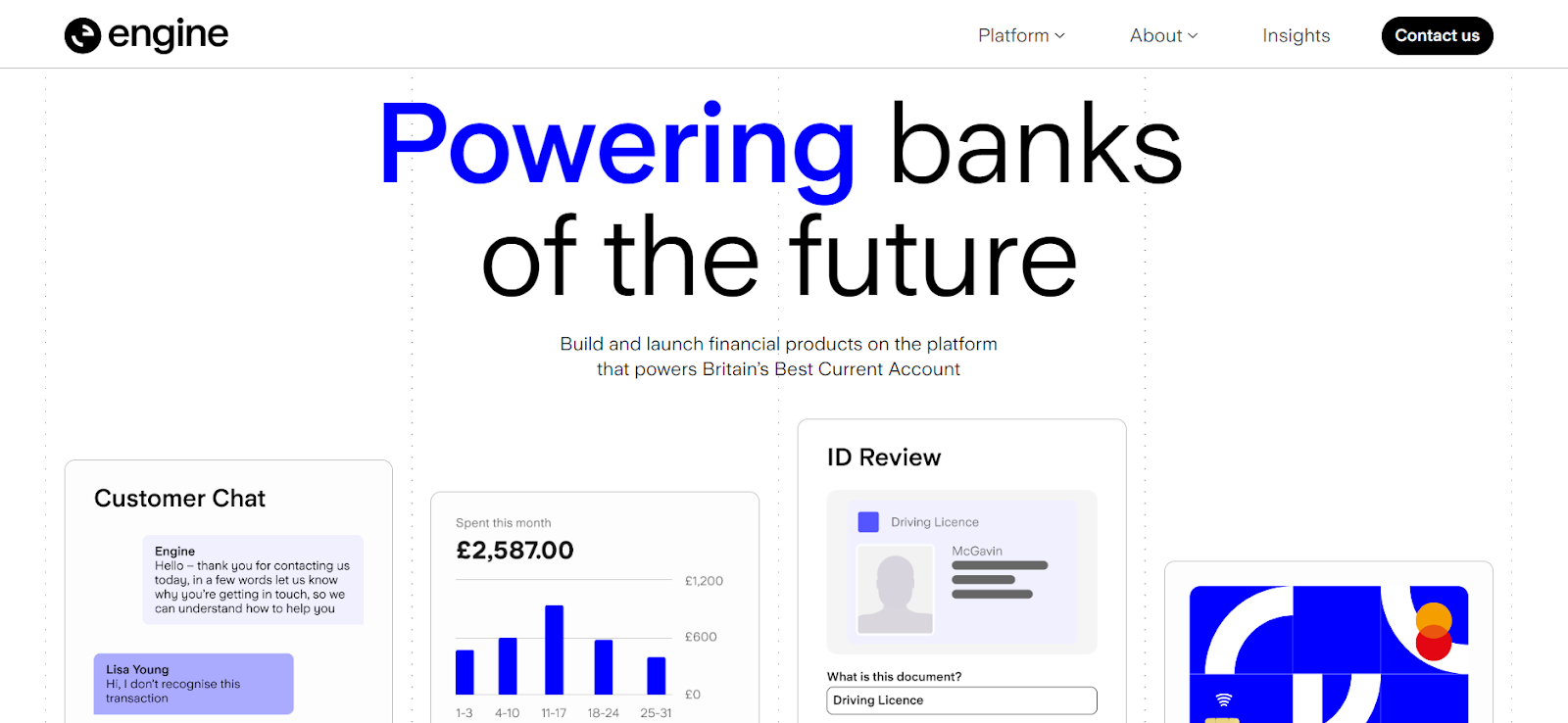
Objective: Engine by Starling, the technology arm of Starling Bank, aims to provide banks and financial institutions with a robust, scalable banking platform as a service. The objective is to enable these organizations to launch and manage their financial products with the agility and efficiency of a leading digital bank.
Implementation: Leveraging the technology that underpins Starling Bank’s award-winning services, Engine by Starling offers a cloud-native, API-driven platform. This platform supports a range of banking operations, from payments to account management, all designed to be highly configurable and scalable.
Outcomes: The collaboration has enabled traditional banks to significantly accelerate their digital transformation journeys, offering them the capability to launch new products rapidly and improve their customer experience. By adopting Engine by Starling’s services, banks have reported enhanced operational efficiency and a more agile response to market demands.
BitPanda

Objective: BitPanda’s partnership model focuses on providing traditional banks with access to cryptocurrency trading and investment services. The aim is to allow banks to offer their customers a secure, user-friendly platform for trading a wide range of digital assets, including cryptocurrencies, precious metals, and more.
Implementation: BitPanda provides a white-label solution that banks can integrate into their existing systems, offering their customers direct access to digital asset trading. This solution includes comprehensive support for regulatory compliance and security, ensuring that banks can offer these services confidently.
Outcomes: Banks partnering with BitPanda have been able to tap into the growing demand for cryptocurrency investments, attracting a broader customer base and generating new revenue streams. This collaboration has also positioned these banks as forward-thinking and innovative, enhancing their brand reputation among digitally savvy customers.
Banking Circle
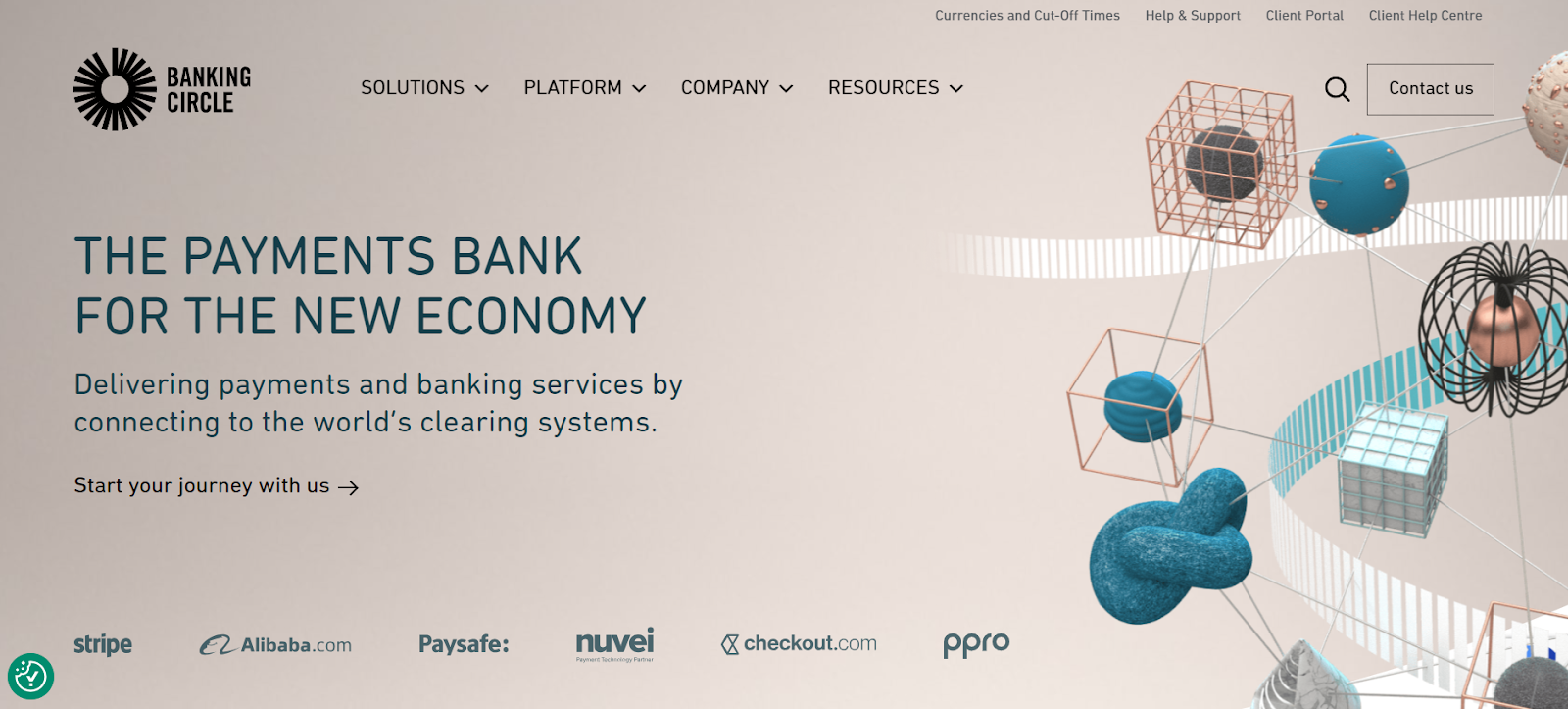
Objective: Banking Circle aims to provide financial infrastructure as a service, enabling banks and fintech companies to offer global payment and banking solutions without the need to establish their own international banking relationships.
Implementation: Through its platform, Banking Circle facilitates cross-border payments, lending, and banking services, leveraging its global network to offer fast, cost-effective solutions. Partners can integrate Banking Circle’s services via APIs, allowing for seamless connectivity with their existing systems.
Outcomes: The collaboration has allowed banks to expand their international payment capabilities efficiently, reducing transaction costs and improving payment speeds. This has enhanced customer satisfaction and competitiveness in the global market.
Bottom Line
The process of selling technology to banks involves more than just a transaction. It represents a strategic collaboration that can redefine banking operations. Fintechs offer banks a pathway to digital transformation, providing technologies that are often plug-and-play, API-driven, and designed for seamless integration with existing banking infrastructure. This enables banks to rapidly adopt new technologies without the need for extensive in-house development, reducing time-to-market for new features and services.
Technologies commonly developed:
- Blockchain Solutions: For secure, transparent transactions and record-keeping.
- Artificial Intelligence and Machine Learning: For personalized banking experiences, fraud detection, and operational automation.
- Payment and Remittance Platforms: To facilitate faster, more cost-effective cross-border transactions.
- Regulatory Technology (RegTech): To streamline compliance processes and reduce risks.
Impact on the Banking Sector
The impact of fintech-developed technologies on the banking sector has been profound. Banks that leverage these innovations can significantly enhance their competitiveness, offering customers more sophisticated, secure, and user-friendly services. This helps not only retain existing customers but also attract new ones, especially those who value digital-first banking experiences. By adopting fintech solutions, banks can also achieve greater operational efficiency, reduce costs, and navigate the complex regulatory landscape more effectively.